
Choosing Wood Flooring for Heritage Property Renovations

When breathing new life into heritage properties, changes should always be sympathetic to the building and its history. Whether you’re adapting historic spaces, undertaking conservation work on a Grade-II-listed building, or reconfiguring an older home’s layout to suit modern day requirements, preserving the character and integrity of the building will be a top priority. And, as flooring plays a big role in a building’s interior aesthetic, it’s a key consideration for renovation work in older properties.
Aesthetic Integrity: Wooden Floors in Heritage Buildings
Wood flooring is a common and significant feature in many of the UK’s heritage properties. Old wood flooring holds so much of a property’s character, contributing to its intrinsic beauty and historic value. Selecting the right wood flooring for these kinds of projects, much like any other material choice, is integral to the success of a heritage property renovation. If these floors are being changed as part of a renovation, or in emergency repair work, finding the right replacement wood flooring requires careful consideration.
There are many wood flooring options for that will look fantastic in historic homes and public spaces. Equally, though, there will be a lot of options that are not so well-suited, and which will look out of place in these charming old buildings.
Honouring the Property’s History: A Bespoke Approach
Every heritage property is unique. So, the ideal choice of wood flooring supplier will be one that can offer made-to-order finishing, with the ability to control texture and to add pre-treatments to age the wood. That way, you can choose a bespoke option. This means you can tailor it to a project’s exacting aesthetic requirements, resulting in a floor that is sympathetic to the property.
Photo credit: Garry Meakins Studio/Christopher Horwood

Choose the Right Wood Flooring Specification for the Space
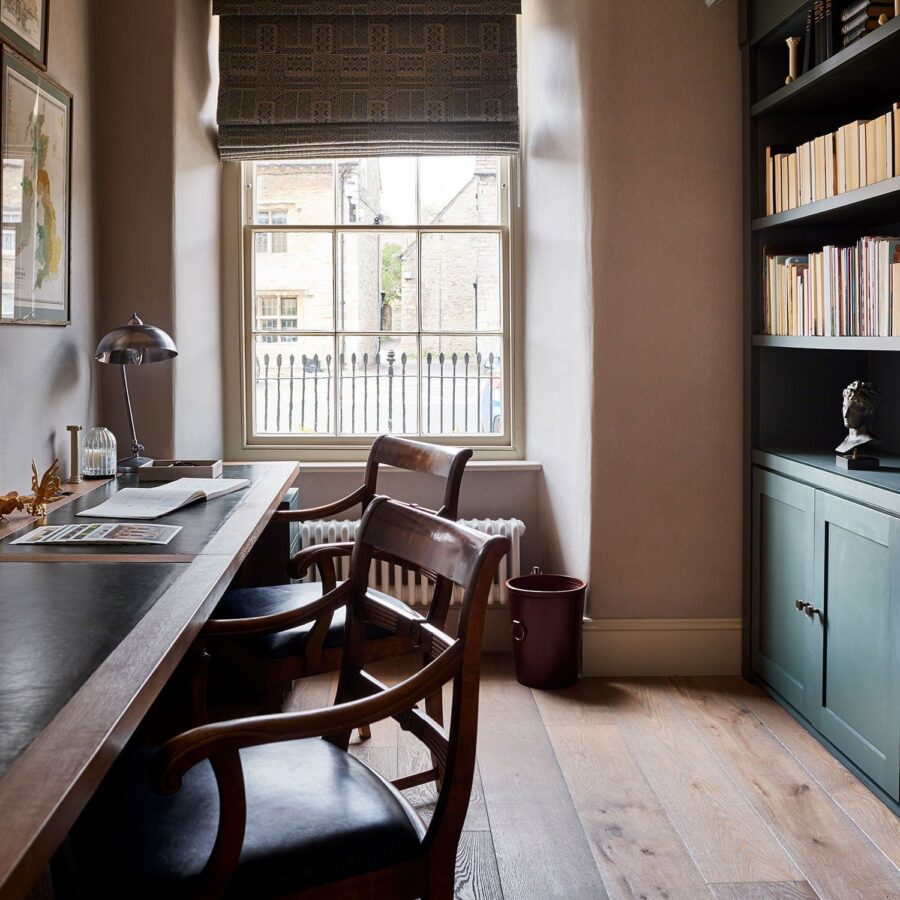
It’s vital that you make any changes to the wood flooring in older properties with the care and attention that they deserve. A renovation may demand the recreation of a specific parquet pattern, a mixed-width plank floor, or an extra-wide oak floor that’s heavily distressed. If you find the right supplier, they should be able to source exactly what you need to match the flooring to your property’s character.

Board Widths
Often, you’re likely to want wood flooring for your project that’s a similar width and appearance as the original flooring of its era. You may want to specify a particular board width, to reflect the width of the original floor, or to suit the intended space. The traditional appearance of mixed-width planks is likely to be a more heritage-appropriate choice for many projects, but that’s not to say it will suit all properties.
Photo credit: SGS Design/Anna Yanovski

Aged Oak Flooring Options: The Perfect Finish
There are many ways to give new oak floorboards the authentic appearance of a time-worn wooden surface. Adding textures to the boards is a popular method.
Adding Texture
Brushed Boards
Giving wood flooring a brushed texture involves wire brushing the planks to remove the softer wood fibres. This accentuates the grain of each floorboard. It highlights the wood’s unique structure and is an effective way to achieve the appearance of a floor that has worn over decades.
Boards from our Vintage collection feature a heavy-brushed texture, to create an elegant aged look that complements older properties.


Distressed Surfaces
Distressed textured boards are an excellent choice too. Suppliers skilfully tumble the boards to create minor surface indentations on the surface and edges. If done well, this texture is particularly well-suited to heritage properties and will continue to age gracefully.


Colour & Finish Choice
There are a wide variety of available options for pre-treatments and tinted oils to age the surface of wood flooring. This allows you to create a floor that is the perfect colour for your heritage property, even down to the sheen level on the finished surface.
Approach wood flooring companies with in-house finishing expertise. They should be able to make floorboards to colour match to an offcut of the original floor. Or they could create a brand-new bespoke finish with you and your property’s needs in mind.
Photo credit: Anouska Tamony/Nick George


Consider Engineered Wood Flooring for Heritage Properties
Engineered wood flooring is an excellent choice for period properties. High-quality engineered boards can balance modern functionality and practicality with an aesthetic that preserves a building’s historic character. There are some fantastic engineered oak flooring options available with an aged look designed to match historical aesthetics. Some of these engineered wood floors are indistinguishable from original century-old oak flooring.
An Example: Our Regency® Grey Oak
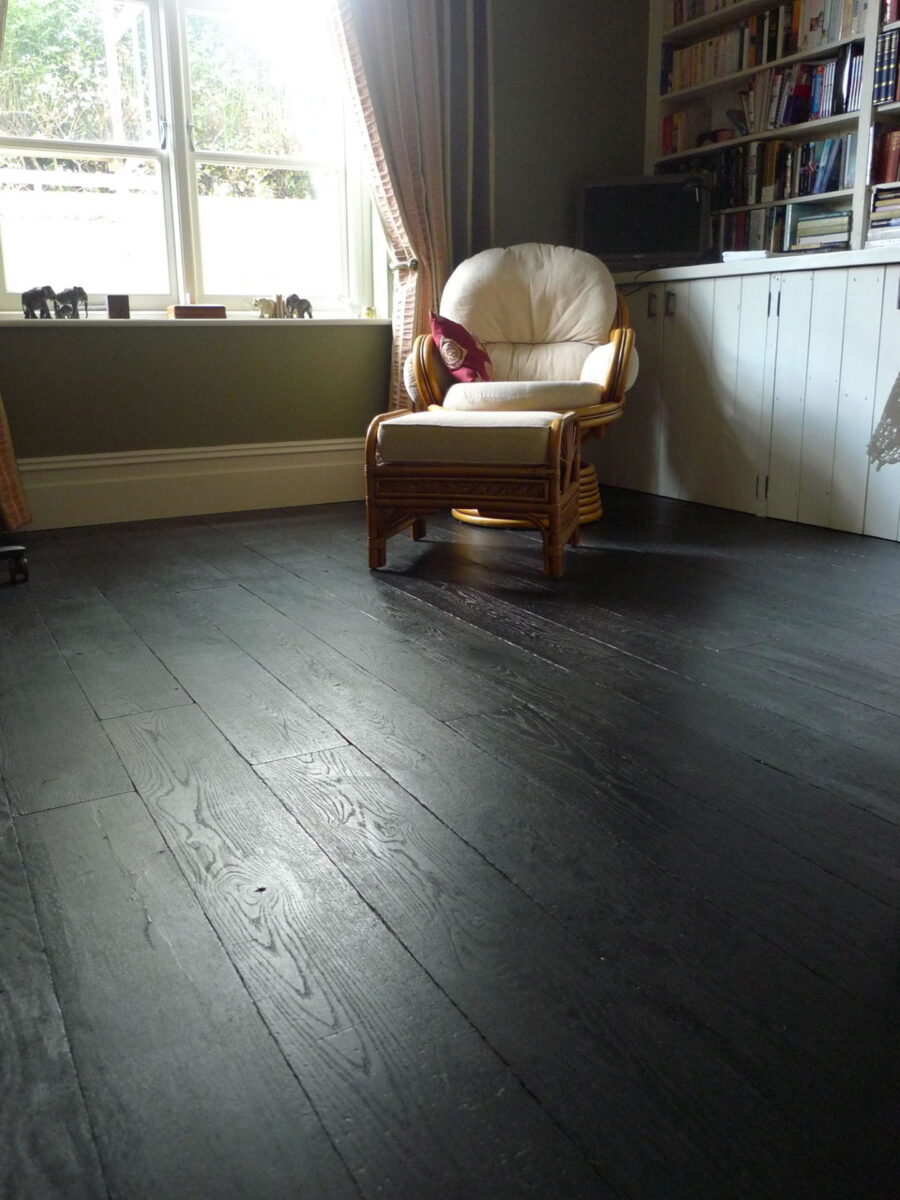
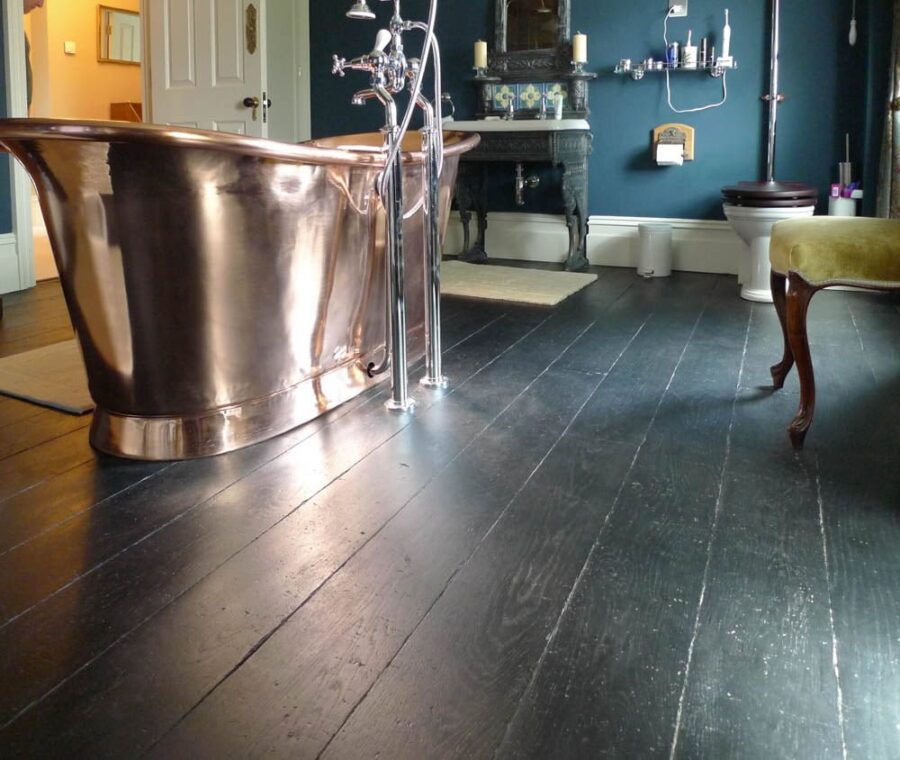
Our Regency® Grey oak flooring has been a popular choice for many of our clients with period homes. These boards have a rich colour and patina, and the authenticity of the distressed texture makes them indistinguishable hundred-year-old oak floorboards. Our Regency® Tectonic® oak boards combine this aged look with all the advantages of modern engineered wood flooring.
Photo credit: Drummonds Bathrooms
Focus on Quality & Longevity
Owning a historical building means a commitment to the preservation of its rich cultural heritage for future generations. Invest in high-quality engineered wood flooring with a thick top layer of oak. This will provide a long-lasting, dependable floor.

Stability of Engineered Wood Flooring
Due to its exceptional stability, high-quality engineered oak flooring is an excellent option. Heritage properties that are often more prone to heat and humidity changes. These properties need wood flooring that can handle these kinds of environmental fluctuations. Compared to solid wood options, engineered wood floors make for a more dimensionally stable, dependable floor.
These stability benefits also mean it is compatible with underfloor heating systems too. So, if you plan on upgrading to a modern heating system as part of your project, a high-quality engineered wood floor could be a great option to accommodate this.
Sustainable Engineered Oak Flooring
Sustainability is an important consideration for heritage renovation projects. By using engineered wood flooring, manufacturers use much less slow-growing oak to produce the boards. The harvested oak goes a lot further than in the production of traditional solid wood flooring options.
As well as honouring the past, be sure to source sustainable materials. Source your wood flooring from suppliers who work with managed forests. Look for FSC or PEFC-certified suppliers to ensure responsible sourcing of the timber.
Foot Traffic for Public Spaces
Places of worship, museums and other public spaces will see a lot of foot traffic, so durability must be a priority. Use hard-wearing wood species and tough finishes, and darker colours that will stand the test of time and age gracefully. You’ll want a flooring finish that’s easy to maintain too.


Structural Considerations
Many heritage properties have uneven subfloors or structural peculiarities, requiring careful preparation. For example, contractors may need to level or reinforce subfloors. Ventilation is critical to avoid moisture build-up, especially with suspended timber floors.
Consult Your Local Conservation Officers
We always recommend engaging with your Local Conservation Officers or heritage consultants to make informed choices about the materials and techniques you plan on using. They will ensure compliance with regulations. If the property has original timber flooring that contributes to its historical significance, replacing it with engineered wood may need consent. If so, you may be required to submit a Listed Building Consent (LBC) application.
In properties where flooring is old enough to hold archaeological value, the option to restore and repair it is favourable. In older buildings where the original floor is beyond saving, or where there are less restrictions, there may be the option to use new wood flooring materials, as long as they are in keeping with the property’s style and character.
Discover Aged Oak Flooring
Take a look at our aged oak flooring options, ideal for heritage properties.