
Non-Toxic Engineered Wood Floors: VOCs Explained

VOCs and Engineered Wood Flooring
When investing in luxury wood flooring, aesthetics and durability matter — but so does your family’s health. Understanding what makes engineered wood flooring truly non‑toxic can help you create a home environment that’s both beautiful and safe.
Why Indoor Air Quality Matters
Your home should be your sanctuary, not a source of hidden pollutants. Yet many building and flooring products slowly release harmful chemicals long after installation. This is especially important for:
- young children
- elderly relatives
- people with asthma, allergies, or chemical sensitivities.
The good news? With the right information, you can make confident decisions that protect both your wellbeing and your investment.

Understanding VOCs in Flooring
Before we look at hardwood flooring specifically, let’s talk about VOCs.
Volatile Organic Compounds (VOCs) are chemicals that evaporate at room temperature, releasing gases into the air you breathe. Their effects can include:
- short-term symptoms: headaches, dizziness, and respiratory irritation
- long-term risks: links to more serious health conditions
Common household sources include paints, cleaning products, and some adhesives — but unfortunately, certain flooring materials can also continue off-gassing VOCs for months or even years.
The Formaldehyde Issue:
Formaldehyde is one of the most prevalent VOCs found in building products. Because the International Agency for Research on Cancer (IARC) classifies formaldehyde as a known human carcinogen, minimising exposure indoors is crucial.
The Hidden Dangers in Common Flooring
Not all flooring is designed with indoor air quality in mind. Some materials — including certain vinyls, laminates, and carpets — may contain high amounts of VOC‑emitting adhesives, plasticisers, or chemical additives. These VOCs can continue to be released long after they are installed, creating a toxic living environment.
This is where natural materials stand out. Real wood flooring, especially when manufactured with high‑quality adhesives and low‑VOC finishes, offers a significantly safer alternative.
What Makes Engineered Wood Flooring Safe?
Because engineered wood is made from natural timber rather than synthetic plastics, it typically maintains low VOC levels. However, the safety of engineered flooring can vary dramatically depending on manufacturing quality.
Understandably, our clients want to ensure that our engineered wood flooring is produced in a way that makes it non-toxic and safe to use.

Quality Construction Standards
Choosing building products and furniture made with natural materials and fewer chemicals is the best way to create healthier living spaces.
Low-VOC Engineered Wood Flooring
E1 Classification
Our engineered oak flooring is rated E1, meaning formaldehyde emissions are no more than 0.1 parts per million — one of the strictest low‑emission standards in Europe.
Premium Materials
We use a high‑quality multi‑ply plywood base, bonded with low‑VOC adhesives. However, some manufacturers use cheaper adhesives that are not as effective, opting for:
- MDF or HDF cores
- lower‑grade resins with higher formaldehyde content
These shortcuts may reduce costs, but they significantly increase off‑gassing and compromise air quality long‑term.
Pre‑Finished vs On‑Site Finished Floors
Finishing plays a major role in overall indoor air safety. Whether pre‑finished or finished on site, the products used can either enhance or undermine your flooring’s non‑toxic credentials.
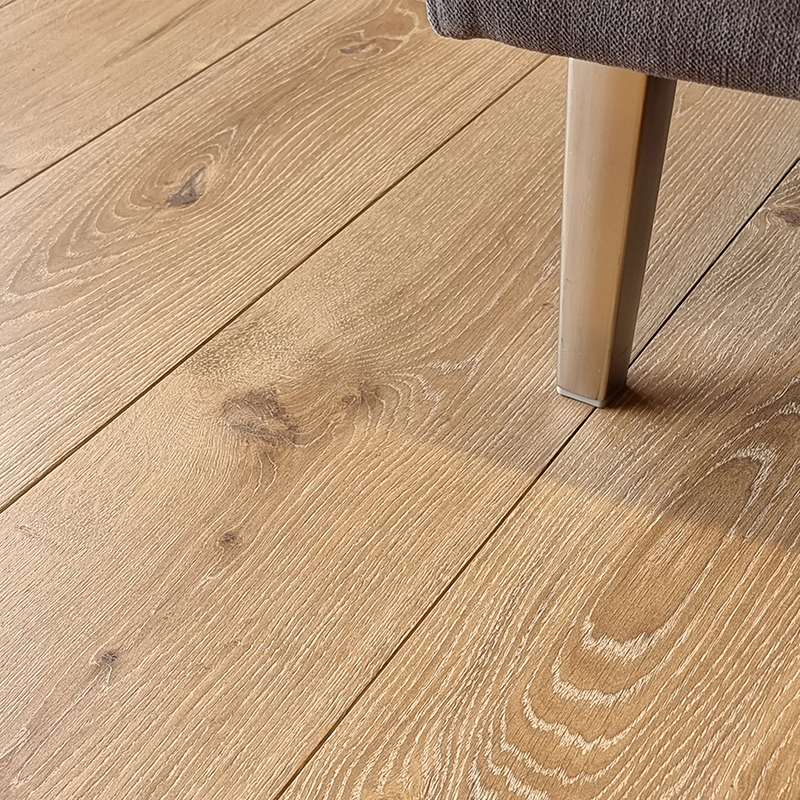
Our Low‑VOC Finishing Solutions
UV‑Cured Oils
Many of our finishes are VOC‑free. Because they’re typically 100% solids (no evaporating solvents), and cured instantly under UV light, they release zero VOCs once cured.
Traditional Hardwax Oils
We only use low‑VOC hardwax oil formulations, both for pre‑finishing in our workshop and for any on‑site applications.
As a producer, this means using adhesives, stains, oils, and other finishing products that won’t have a detrimental effect on the home’s air quality. We do all we can to ensure that VOC-levels in our prefinished wood flooring are as low as possible.
UV-cured Oils
All our UV-cured oils are low-VOC or VOC-free, ensuring a healthy living environment wherever our flooring is installed. UV-curing oils are typically 100% solids, meaning they don’t contain the solvents that evaporate and release VOCs into the air. These modern oil finishes contain no VOCs after curing, meaning that once the oil has been exposed to UV light and fully hardened, there are no volatile organic compounds left to release into the air.
Traditional Hardwax Oils
Any hardwax oils that we use in pre-finishing and on-site finishing are also low-VOC products.
Water‑Based Products
Our water‑based stains and polyurethane lacquers are carefully selected for their low-VOC profiles. Once dried, they become VOC‑free and safe for occupied spaces.
Installation Matters Too
Even the safest flooring can be compromised by the wrong installation materials.
Adhesives
We supply and use low‑VOC installation adhesives as standard to minimise chemical exposure.

Underlays
All our underlays are selected for their low‑VOC ratings, ensuring your entire flooring system — from subfloor to surface — supports clean indoor air.
Choosing a Supplier: Trust and Transparency
- Clearly disclose their manufacturing processes
- Provide independent certifications and emissions testing
- Use measurable standards such as E1 compliance.
- Prioritise premium materials over low-cost shortcuts
- Offer technical support and detailed product information
Creating Your Healthy Home
Investing in non‑toxic engineered wood flooring means investing in your family’s long‑term well-being. By choosing natural materials, demanding low‑VOC standards, and partnering with a supplier committed to transparency, you can enjoy beautifully crafted flooring that enhances your indoor environment in every way.
Your home should be hardwearing, beautiful, and above all, healthy. With the right engineered wood flooring, you never have to compromise.
We’re Here if You Need Help
If you need any more advice on flooring for your project, contact our friendly Customer Service Team.